Guide · 3 November 2026
Best coffee beans UK: how to choose, with real prices
There is no single best bag, but there are clear signs of a good one. What to look for, what good coffee costs, and where to start, from 87 UK roasters.
By Meet Your Coffee editors
The best coffee beans for you are freshly roasted, sold as whole beans, roasted for the way you brew, and come from a roaster who tells you where the coffee grew and when it was roasted. In the UK that usually means an independent specialty roaster, and about £10 to £14 for a 250 g bag.
There is no single best bag, whatever a listicle says. Taste is personal, and a coffee that is wonderful in a cafetière can be harsh as espresso. What we can do is show you the signs of a good bag, what good coffee costs, and where to start. The numbers in this guide come from the coffees of 87 UK roasters listed on Meet Your Coffee in October 2026.
What makes coffee beans good?
Four things matter more than the brand on the front.
- Freshness. Coffee is a roasted food and it fades. A good bag shows a roast date, not just a best-before date that can be a year away.
- Traceability. The more a roaster tells you (country, region, farm or co-operative, variety, process), the more likely they bought carefully and paid for quality.
- Grade. The Specialty Coffee Association describes specialty (or "speciality") coffee as coffee "recognized for its distinctive attributes", which give it extra value. The long-standing rule of thumb is a score of 80 or more out of 100 when professional tasters cup it. Most independent UK roasters buy at this level.
- A roast that suits your brewer. Roasters often roast the same coffee differently for espresso and for filter. Buying the right one makes more difference than spending more.
How to read a coffee bag in two minutes
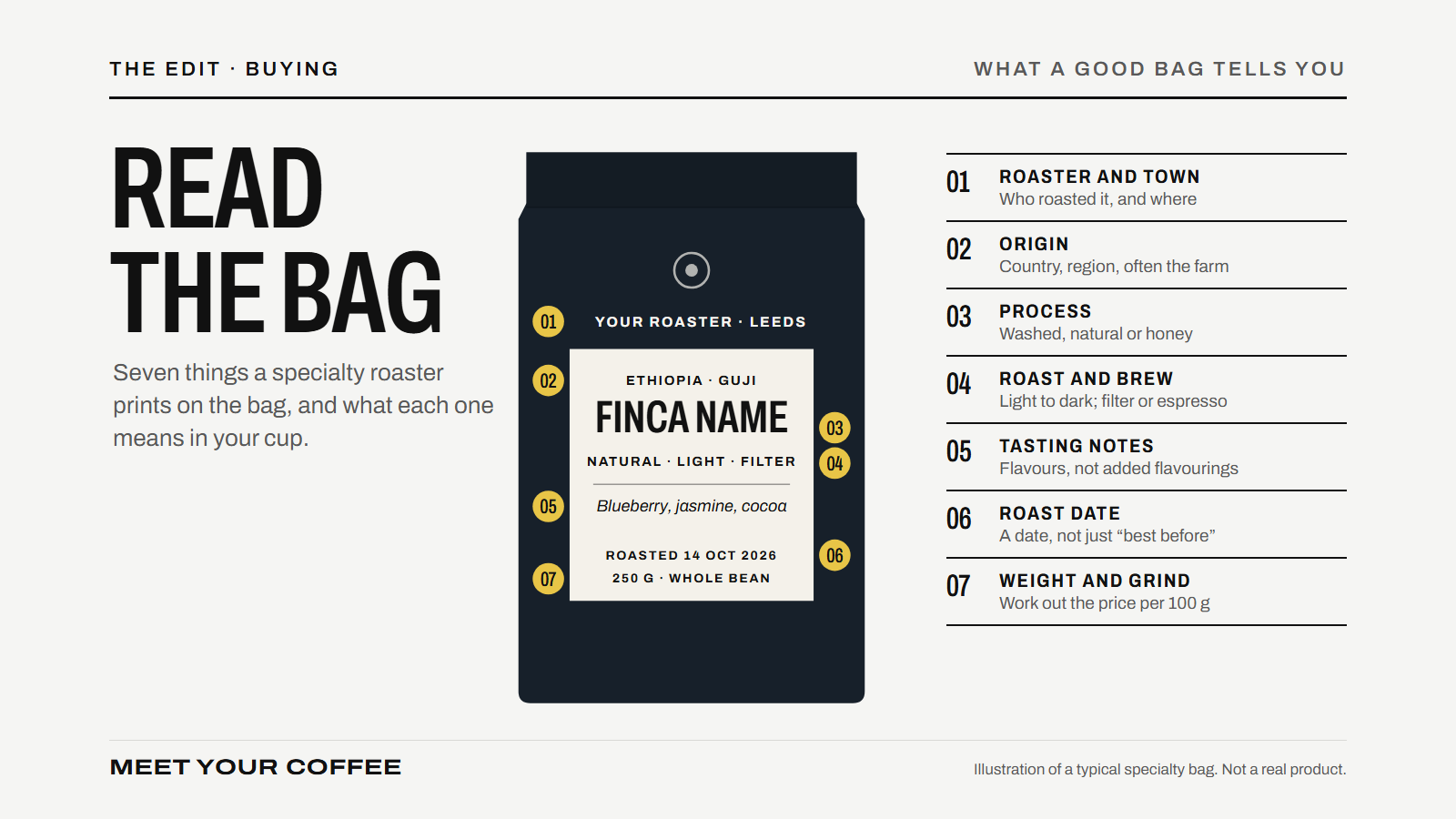
A specialty bag carries more than a supermarket pack. Here is what each line tells you:
- Roaster and town. Who roasted it and where. Where it was roasted never limits where it can be delivered.
- Origin. Country, region and often the farm. "Single origin" means one place; a blend mixes several.
- Process. Washed coffees taste cleaner and brighter; naturals are fruitier and heavier; honey sits in between.
- Roast and brew. Light, medium or dark, and whether it was roasted for filter, espresso or both ("omni").
- Tasting notes. "Blueberry, cocoa" describes flavours the roaster tasted, not things added to the coffee.
- Roast date. The single most useful line on the bag.
- Weight and grind. Bags vary from 200 g to 1 kg, so compare the price per 100 g, not the bag price.
Which coffee beans should you start with?
Start from what you already like in a cup, not from a ranking.
- If you like chocolate, nuts and caramel, look at medium roasts from Brazil and Colombia. Chocolate is the most common flavour family in our catalogue. See our chocolatey coffees and Brazilian coffee beans.
- If you like bright, fruity coffee, try light roasts from Ethiopia and Kenya. Start with fruity coffees or Ethiopian coffee beans.
- If you drink it with milk, choose a coffee roasted for espresso, usually medium to medium-dark. Our guide to coffee beans for espresso goes further.
- If you want less caffeine, specialty decaf is now very good: 86 of the 87 roasters we checked sell one. See how to choose decaf coffee beans.
Not sure? Our Find my coffee quiz asks a few quick questions and suggests coffees, with the reason for each.
Single origin or blend?
A single origin comes from one country, and often one region, farm or co-operative. It tastes of that place, changes with the harvest, and is the best way to discover what you like. A blend combines coffees from two or more places to build a particular taste, usually balanced and chocolatey, and to keep it the same all year. Blends are a safe choice for milk drinks and bean-to-cup machines; single origins are where the surprises are. Neither is better. Most specialty roasters sell both.
Coffee beans by origin: a quick guide
Origin is the biggest single clue to taste. These were the six most common origins among the coffees in our catalogue in October 2026, with the flavours each is best known for:
- Colombia (the most common, about 230 coffees): caramel, red fruit and chocolate; sweet and easy to like. See Colombian coffee beans.
- Brazil (about 215): nuts, milk chocolate and low acidity; the backbone of many espresso blends.
- Ethiopia (about 120): floral and fruity, from jasmine and bergamot in washed coffees to blueberry in naturals.
- Kenya (about 90): bold and juicy, with blackcurrant and grapefruit. See Kenyan coffee beans.
- Guatemala (about 80): chocolate, toffee and a gentle fruitiness.
- Peru (about 70): soft, sweet and nutty, and often organic.
These are tendencies, not rules: the farm, the process and the roast all change the cup, which is why the roaster's own tasting notes are worth reading.
How much should good coffee beans cost in the UK?
Across the coffees in stock at 87 UK roasters in October 2026:
- The typical 200 to 250 g bag cost £12. The middle half cost between £9.95 and £14.
- The typical price per 100 g was £5 in small bags and £3.75 in bags of 750 g or more. Buying a kilo usually saves about a quarter, if you will drink it while it is fresh.
- Most coffees (seven in ten) come in a 200 to 250 g bag as their smallest size, and many are also sold by the kilo.
Delivery changes the sum. A £10 bag with £4.50 postage costs more than a £12 bag with free delivery. Every coffee on Meet Your Coffee shows the bag price, the price per 100 g and, where the roaster publishes it, the delivered total. For value, start with coffee under £10 a bag.
Supermarket coffee beans or a roaster?
Supermarket beans are not bad coffee, but they are built for a long shelf life. Most packs show a best-before date many months away and no roast date, and they rarely say which farm or process the coffee came from. Beans from a roaster are usually roasted to order or in small batches, so they reach you within days of roasting.
The price gap is often smaller than people expect: across every bag size, the typical specialty coffee in our catalogue costs about £3.90 per 100 g. Check the price per 100 g on the supermarket shelf label and compare.
Whole beans or ground?
Whole beans keep their aroma much longer. Grinding exposes far more of the coffee to air, so the gas and aroma that whole beans lose over weeks escape from ground coffee within minutes. If you have a grinder, buy whole beans and grind just before you brew. If you don't, almost every roaster will grind for you, for free: in our catalogue, 94% of coffees can be bought ground, and in 98% of cases ground costs the same as whole bean. Our guide to ground coffee or whole beans explains which grind you need.
Three coffees to start with
Below this guide you will find three coffees from different roasters, one for each starting point above: a chocolatey espresso blend, a bright Kenyan filter coffee and a fruity Ethiopian. They are examples, not winners, and we show today's price and availability from each roaster. If one sells out, it disappears from the list automatically.
What this means when you buy
- Choose a bag with a roast date, and buy what you will drink in a week or two.
- Match the roast to your brewer: espresso coffees, filter coffees.
- Compare the price per 100 g and the delivered total, not the bag price.
- Buy from the roaster. We never sell coffee ourselves; every "Buy" button goes to the roaster's own shop.
Questions people ask
Are expensive coffee beans better?
Up to a point. Above about £15 a bag you are often paying for rarity (a competition lot, an unusual variety or process) rather than a better everyday cup. At the other end, very cheap beans rarely come with a roast date or details of where they grew.
Are 1 kg bags worth it?
If you drink two or three cups a day, yes: they are about a quarter cheaper per 100 g. Keep the beans airtight, and consider freezing part of the bag in small, truly airtight portions.
How long do coffee beans last?
They are safe to drink for months, but the flavour fades. The US National Coffee Association suggests buying what you will use in a week or two, keeping the beans in an airtight, opaque container somewhere cool and dark, and grinding just before you brew.
How did you choose the coffees in this guide?
We picked in-stock coffees from different roasters that fit each starting point, with clear tasting notes and a 200 to 250 g bag. We do not rank roasters, nobody paid to appear, and some roasters' links may earn us a commission, which never affects what we list or how it is sorted.
In this story
The 2 coffees mentioned, with today’s price from the roaster. Unavailable coffees are left out automatically.
- £11.00 · 250 g
- £13.95 · 250 g