Guide · 3 November 2026
Best coffee beans for espresso: how to choose
Any coffee can be an espresso, but some are far easier to love. How to pick beans for a home espresso machine or a bean-to-cup, with a starting recipe.
By Meet Your Coffee editors
The best coffee beans for espresso are fresh whole beans roasted for espresso, usually to a medium or medium-dark roast. If you drink lattes or flat whites, pick ones with chocolate, nut or caramel notes. Buy from a roaster who prints a roast date, and grind just before you brew.
Espresso is the most demanding way to brew coffee. It pushes hot water through a tightly packed puck of finely ground coffee at high pressure, in under half a minute, and it magnifies everything: sweetness, acidity, bitterness and staleness. The right beans make a home machine sing; the wrong ones make it sour or harsh, however carefully you dial in. This guide explains what to look for, with figures from the 297 espresso coffees that 72 UK roasters listed on Meet Your Coffee in October 2026.
What makes a coffee good for espresso?
- A roast developed for espresso. Espresso extracts quickly, so roasters usually take espresso coffees a little further than filter coffees. The bean becomes easier to extract and sweeter, and the acidity softens.
- Sweetness and body. Coffees that taste of chocolate, caramel and nuts make round, forgiving espresso. In our catalogue chocolate is the most common flavour family among espresso coffees, followed by nutty and caramel.
- Freshness. Espresso shows staleness more than any other method. Old beans make thin, flat shots with little crema, and pre-ground coffee loses in minutes the gas and aroma that whole beans keep for weeks.
Espresso beans vs coffee beans: is there a difference?
Not in the plant. "Espresso beans" are ordinary coffee beans that a roaster has blended and roasted with espresso in mind. You can make espresso from a filter roast and filter coffee from an espresso roast; it is just harder to make them taste good. Some roasters sell "omni" roasts designed to work both ways, a sensible choice if you switch between an espresso machine and a cafetière.
Blend or single origin?
Blends combine coffees from two or more places to make a balanced, consistent espresso that tastes much the same from bag to bag. They are the easiest place to start, especially for milk drinks.
Single origins come from one country, region or farm, and taste of that place: a Brazilian is nutty and chocolatey, an Ethiopian fruity and floral. They are more exciting and a little less forgiving.
Brazil is by far the most common origin among the espresso coffees in our catalogue (62 of 297), alone or in blends, followed by Colombia and Ethiopia. Browse Brazilian espresso coffees or Colombian espresso coffees.
Beans for milk drinks or for black espresso?
- Lattes, cappuccinos and flat whites: medium to medium-dark roasts with chocolate, toffee or nut notes stand up to milk. See chocolatey coffees.
- Espresso and americano, no milk: you can go lighter and fruitier; berry and citrus notes come through clearly without milk.
- Evening espresso: many roasters now make a decaf for espresso. See decaf espresso coffees.
The best coffee beans for a bean-to-cup machine
Bean-to-cup machines grind and brew automatically, which changes the advice a little:
- Avoid very dark, oily beans and flavoured beans. De'Longhi, for example, advises against beans that are too oily, caramelised or coated, because they can stick to the grinder and damage it. Medium to medium-dark roasts work best.
- Buy bigger bags if you drink a lot. Bean-to-cup owners often drink several cups a day, and kilo bags are about a quarter cheaper per 100 g. Keep only a few days' worth of beans in the hopper, which is rarely airtight, and the rest sealed.
- Choose a roast for espresso or omni. Filter roasts can taste sour from a bean-to-cup machine.
A starting recipe for espresso at home
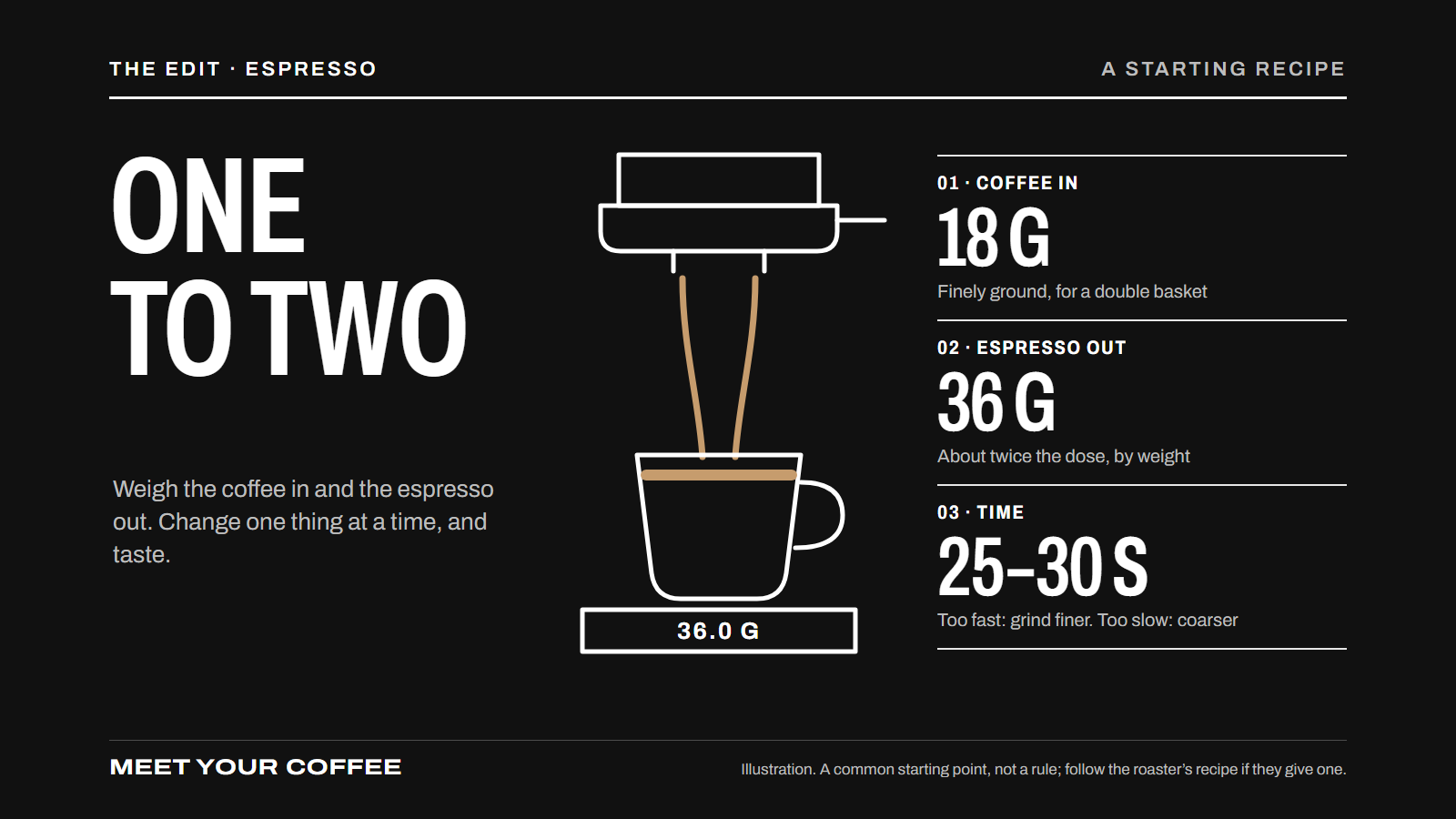
Most modern home machines with a double basket work well with this starting point:
- Coffee in: 18 g of finely ground coffee.
- Espresso out: about 36 g in the cup, roughly twice the dose by weight.
- Time: 25 to 30 seconds from starting the pump.
If the shot runs fast and tastes sour, grind finer. If it runs slowly and tastes bitter, grind coarser. Change one thing at a time. The traditional Italian espresso, as certified by the Istituto Nazionale Espresso Italiano, is smaller: about 25 ml in the cup. Many roasters print their own recipe on the bag or website; when they do, start there.
What do espresso beans cost?
Less per gram than you might expect. The typical espresso coffee in our October 2026 catalogue cost £3.45 per 100 g, against £3.90 for coffee overall, mainly because espresso coffees are so often sold in kilo bags. A 250 g bag of a good espresso blend usually costs £9 to £12.
What this means when you buy
- Choose beans roasted for espresso (or omni), with a roast date on the bag.
- For milk drinks, pick chocolate, caramel and nut notes; for black espresso you can go fruitier.
- Compare every UK roaster's espresso coffees in one place: espresso coffees.
- For a bean-to-cup machine, avoid very dark, oily or flavoured beans: see medium roast coffees.
Questions people ask
Can I use pre-ground coffee in an espresso machine?
In a traditional machine, yes, if it is ground fine for espresso, but it goes stale quickly and you can't adjust the grind. In a bean-to-cup machine, only through the bypass chute if it has one; never put ground coffee in the bean hopper.
Why is my espresso sour?
Usually the shot runs too fast, so the coffee is under-extracted. Grind finer, or use a little more coffee. Very light roasts can also taste sharp as espresso; try a roast made for espresso.
How long do espresso beans last after opening?
The flavour fades steadily once the bag is open. The US National Coffee Association suggests buying what you will use in a week or two and keeping it in an airtight, opaque container somewhere cool and dark.
In this story
The 3 coffees mentioned, with today’s price from the roaster. Unavailable coffees are left out automatically.
- £9.00 · 250 g
- £11.00 · 250 g
- £13.00 · 250 g