Guide · 3 November 2026
Decaf coffee beans UK: how to choose a good decaf
Almost every UK specialty roaster now sells a decaf. How to tell the good ones apart: the method on the bag, the origin, the roast and the price.
By Meet Your Coffee editors
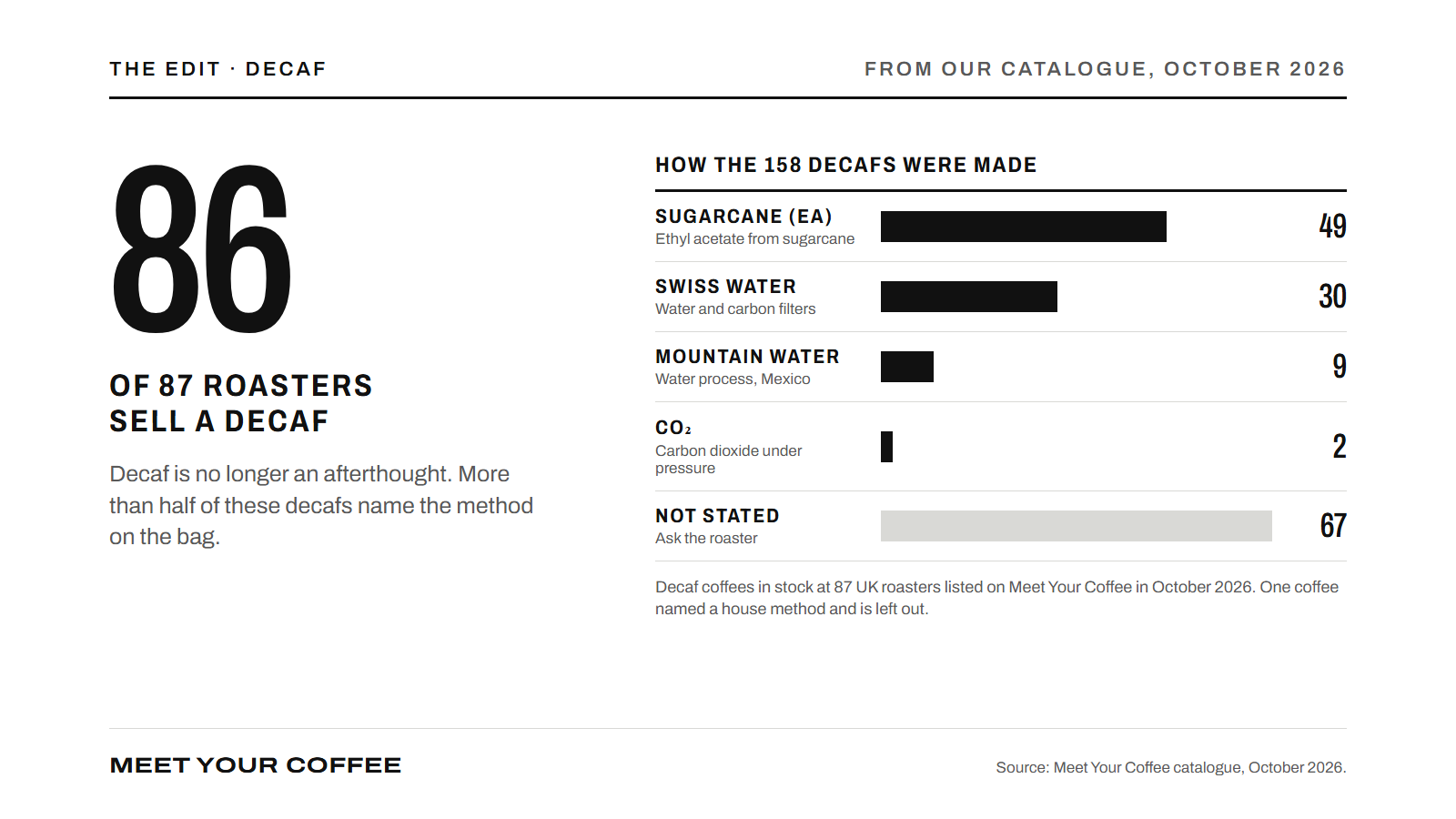
Good decaf coffee beans start as the same specialty coffee as regular beans. They are decaffeinated before roasting by a named method, such as Swiss Water or sugarcane (EA), then roasted recently. In October 2026, 86 of the 87 UK roasters we checked sold at least one decaf, at about the same price as their regular coffee.
Decaf used to be the tin at the back of the cupboard. Today a good decaf can taste of brown sugar, cocoa and ripe fruit, and much more like regular coffee than the decaf many of us remember. This guide explains what to look for on a decaf bag, which method to choose, what decaf costs, and how much caffeine is left. The figures come from the 158 decaf coffees in stock at UK roasters listed on Meet Your Coffee in October 2026.
Is decaf coffee any good now?
Yes, if you buy it from a roaster who treats it as seriously as their other coffees. The quality of a decaf depends on three things: the green coffee the decaffeinator started with, the decaffeination method, and the roast. Specialty roasters now buy decaf lots from named regions and farms, and many print the method on the bag.
The giveaway of a careless decaf is a bag that says only "decaf" and nothing else. A good one tells you the origin, the method and the tasting notes, just like the roaster's regular coffees.
Which decaf method should you look for?
All decaffeination happens to green, unroasted coffee, at specialist plants rather than at the roaster. Of the decafs in our catalogue whose roaster names the method:
- Sugarcane (EA): 49 coffees. The caffeine is washed out with ethyl acetate made from sugarcane, often at origin in Colombia. These decafs often taste sweet, with brown sugar and red fruit.
- Swiss Water: 30 coffees. A water-only process: caffeine passes from the beans into water already saturated with coffee flavour, and carbon filters catch it. No added solvents, and a clean, gentle cup.
- Mountain Water: 9 coffees. A water-based process carried out in Mexico.
- CO₂: 2 coffees. Carbon dioxide under such high pressure that it behaves like a liquid dissolves the caffeine out.
The other 67 decafs did not say. There is no single best method: both of the common ones produce excellent decafs, and each has its fans. What matters is that the roaster knows and tells you. If the bag doesn't say, ask; a good roaster will answer. Our guide to how decaf coffee is made explains each method in more detail.
Where does decaf coffee come from?
Mostly from Central and South America. Colombia accounts for almost a third of the decafs in our catalogue (47 of 158), partly because sugarcane decaf is made right there, at plants such as Descafecol in Manizales. Brazil is next (21), then Peru, Guatemala and Mexico. Decaf from Ethiopia or Kenya is rarer, so if you love fruity African coffees, a decaf version is worth snapping up when you see one.
Decaf for espresso, filter or cafetière
Many roasters roast one decaf for every method, so most decaf bags say "omni" or nothing at all. A few tips:
- For lattes and flat whites, look for chocolate, caramel or nut notes. See our decaf espresso coffees.
- For filter or pour-over, a washed Colombian or Peruvian decaf with fruit notes works well. See our decaf filter coffees.
- For a cafetière, any decaf will do; ask for a coarse "cafetière" grind if you don't have a grinder.
- For less caffeine but not none, try a half-caf blend, half regular and half decaf. See half-caf coffees.
How much does decaf coffee cost?
Almost exactly the same as regular coffee. In our October 2026 catalogue the typical decaf cost £3.86 per 100 g, against £3.90 for regular coffee. A 250 g bag of specialty decaf usually costs £9 to £13. Some roasters charge a little more for decaf to cover the cost of decaffeination, but plenty do not.
How much caffeine is in decaf?
Decaf is not caffeine-free, but it is close. There is no UK legal limit for roasted decaf; the usual industry standard is no more than 0.1% caffeine by dry weight, and some countries, such as Germany, write that into law. (Decaf instant coffee is limited by UK law to 0.3%.) In the cup, the US Food and Drug Administration says decaf typically has 2 to 15 mg of caffeine in an 8 fl oz (240 ml) cup. The UK Food Standards Agency puts a mug of regular coffee at about 100 to 140 mg. If you need to avoid caffeine completely, speak to your doctor; for most people, decaf is a way to enjoy coffee in the evening without the buzz.
How to keep decaf tasting fresh
Decaf drinkers often drink less coffee, so a bag lasts longer and goes stale before it is finished. Buy smaller bags (200 to 250 g), keep them sealed, away from heat and light, and grind just before brewing if you can.
What this means when you buy
- Look for the decaf method, the origin and tasting notes on the bag.
- Compare every UK roaster's decaf in one place: decaf coffees.
- Buy whole bean in a small bag, and drink it within a few weeks of opening.
- You buy from the roaster, on their website. We never sell coffee ourselves.
Questions people ask
Is Swiss Water decaf better than sugarcane?
Neither is better in every cup. Swiss Water uses no added solvent, which some people prefer; sugarcane (EA) decafs are often a little sweeter and fruitier. Taste one of each and decide.
Can I use decaf beans in a bean-to-cup machine?
Yes. Choose a medium roast rather than a very dark one: De'Longhi, for one, warns that beans that are too oily, caramelised or coated can stick in the grinder and damage it.
Why does some decaf taste flat?
Often because it is old, or was a low-grade coffee before it was decaffeinated. A roast date and an origin on the bag avoid both problems.
In this story
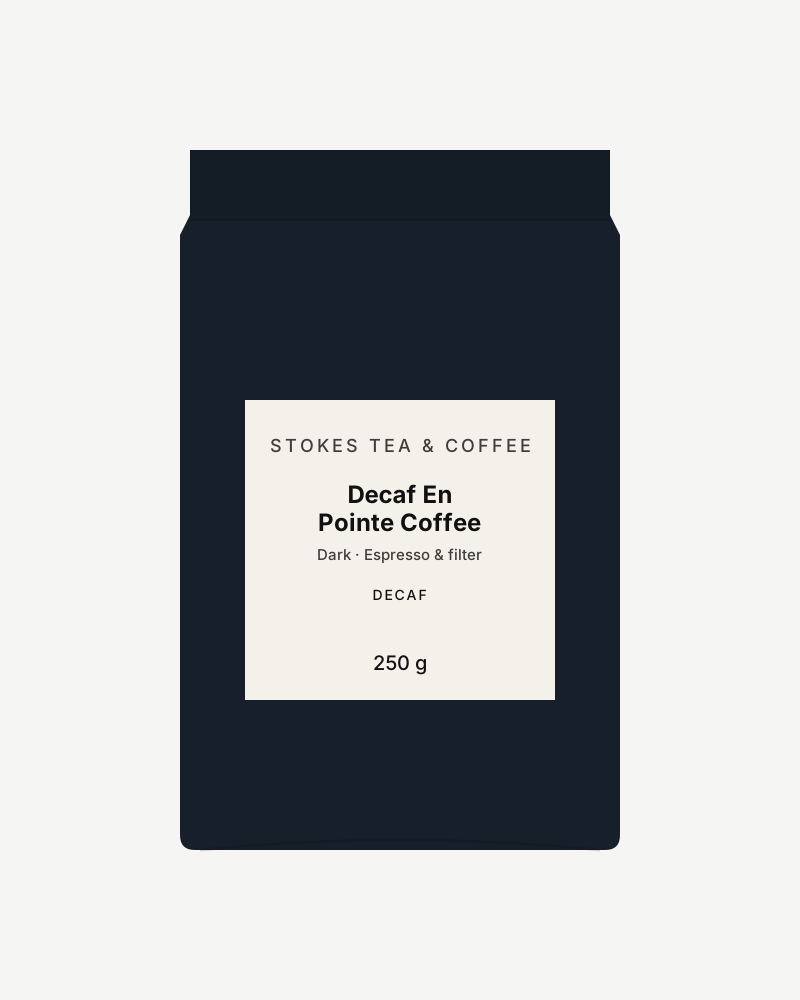
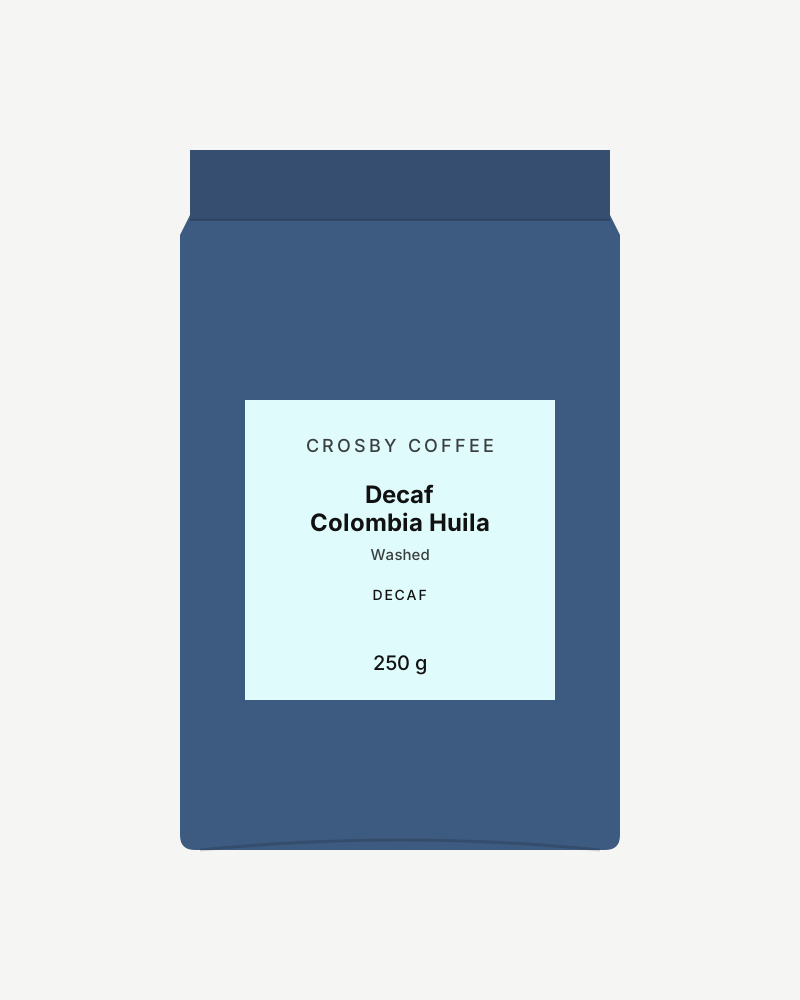
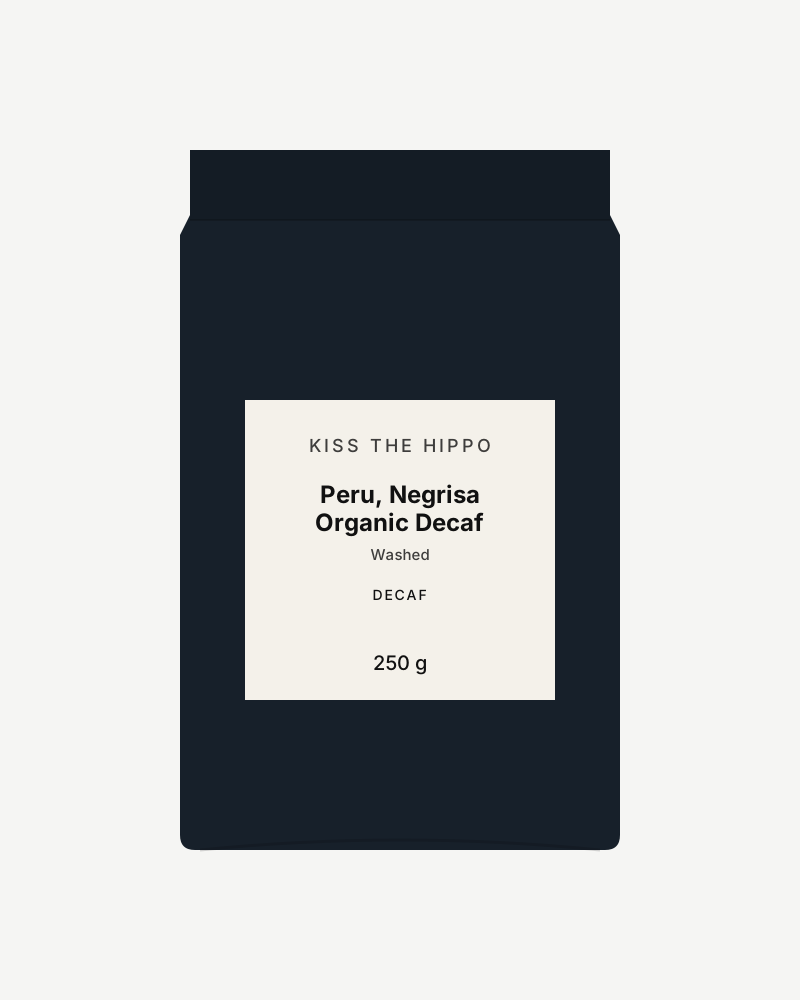
The 3 coffees mentioned, with today’s price from the roaster. Unavailable coffees are left out automatically.
- £10.65 · 250 g
- £10.30 · 250 g
- £13.00 · 250 g